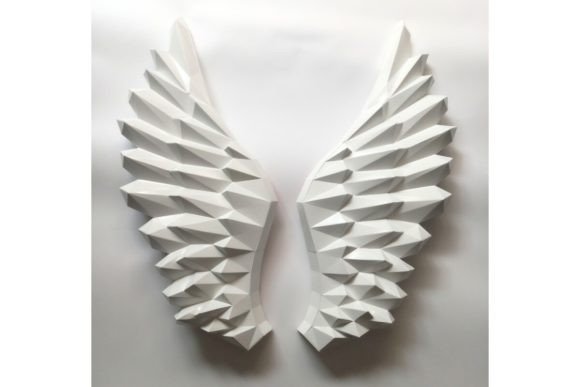
3D Papercraft Wings: An Embroidery Design Review
As a professional designer who spends countless hours digitizing, testing, and reviewing assets for commercial production, I approach every new file with a healthy dose of skepticism. We have all downloaded beautiful digital previews that turn into thread nests or distorted shapes once the needle hits the fabric. When I first examined the 3D Papercraft Wings set, my immediate focus was not just on the aesthetic beauty of the angelic motif, but on its structural integrity as a machine embroidery design. This collection captures a heavenly presence through detailed cutouts, but translating the crisp geometry of a 3D SVG into thread requires careful consideration of stitch physics and fabric interaction.
Translating Paper Aesthetics to Thread Reality
The visual personality of this design is distinct. It mimics the layered, dimensional look of papercraft, which relies heavily on clean lines and negative space. In the world of embroidery projects, this presents a unique opportunity and a specific challenge. The "papercraft" style implies sharp edges and defined segments. As an applique design candidate, this structure is excellent because the distinct sections allow for color blocking without excessive density. However, if you are stitching this out as a standalone fill, you must pay close attention to the transition points between the "paper" layers.
My first impression suggests this design will shine brightest when treated as a mixed-media piece or a precise appliqué rather than a dense, traditional fill. The celestial charm mentioned in the product description translates well to nursery decor and boutique branding, but only if the stitch definition remains crisp. Muddy transitions between wing segments will ruin the 3D illusion, making it look flat and dated. For Etsy sellers and creative entrepreneurs, maintaining that architectural precision is what separates a high-value handmade product from generic craft fair merchandise.
Real-World Application: The Custom Sweatshirt Test
To truly evaluate this asset, I mentally placed it in a current client scenario: a custom embroidered sweatshirt for a small shop’s holiday collection. The goal was a premium, ethereal vibe that appeals to buyers looking for meaningful personalized gifts. Sweatshirt fleece is notoriously tricky; it has texture, stretch, and pile that can swallow fine details.
In this context, 3D Papercraft Wings serves as a striking centerpiece. However, because the design features intricate cutouts, I would strongly advise against using a standard tear-away stabilizer. A heavy-weight cutaway or a fusible no-show mesh is non-negotiable here to prevent the fabric from shifting within those delicate wing segments. If the registration is off by even a millimeter, the "papercraft" gaps will close up or gap unevenly. For a sweatshirt embroidery project like this, I recommend testing the design on a scrap of the exact fleece weight you intend to sell. The loft of the fabric might require adjusting the pull compensation in your software to ensure the wings retain their intended shape after washing.
Furthermore, consider the placement. On apparel, this design works beautifully centered on the chest or as a large back print. For a tote bag design, the structured nature of the wings complements the canvas texture, provided you use enough stabilizer to prevent puckering. The geometric lines of the wings contrast organically with the utilitarian feel of a tote, creating a balanced finished product that feels intentional and professionally executed.
Navigating Fabric Limitations and Hoop Constraints
While the versatility of this digital embroidery file is appealing, there are environments where caution is required. The detailed cutouts that give the wings their character are vulnerable on certain substrates.
- Stretchy Fabrics: Ribbed knits or thin jersey are risky. The tension required to create clean satin stitch borders around the papercraft segments can distort the garment. Always test on a similar stretch percentage before committing to a production run.
- Curved Surfaces: If you plan to use this for cap embroidery, verify the hoop size and curvature. Complex, multi-segment designs often flatten awkwardly on curved brims. This design likely performs best on flat surfaces or slightly curved areas like baby onesies (with proper hooping technique).
- Dark vs. Light Fabrics: The "heavenly" aesthetic often implies whites, creams, or pastels. On dark fabrics, the internal cutout details may get lost unless you use high-contrast thread colors or a light underlay base. Conversely, on white fabric, shadow work or tonal threads can enhance the 3D effect without relying solely on color contrast.
- Frequent Washing: For baby embroidery or kitchen linens, durability is key. Ensure the connecting points between wing segments are reinforced. Delicate paper-style joints are the first to fray in the wash. A running stitch outline alone may not suffice; consider a reinforcing satin stitch at stress points.
Commercial Value and Brand Consistency
For small business owners and apparel decorators, time is money. A design that requires constant troubleshooting eats into profit margins. 3D Papercraft Wings offers strong commercial potential because of its niche appeal. It bridges the gap between religious iconography and modern geometric art, making it suitable for both traditional holiday embroidery and contemporary fashion.
When listing items featuring this design, your mockups matter. Because the design relies on dimensionality, flat digital previews can be misleading. I recommend stitching a sample and photographing it in natural light to show the texture and layering. This builds customer trust and reduces returns due to unmet expectations. For those selling design assets or printable mockups, ensure your representations accurately reflect how the stitch density interacts with fabric texture. Misrepresenting a 3D SVG as a simple flat graphic can lead to dissatisfaction among fellow makers who expect plug-and-play performance.
Essential Designer Notes for Success
Before you load this embroidery file into your machine for a client order or personal project, run through this practical checklist. These steps are born from years of fixing avoidable mistakes in commercial embroidery workflows.
- Verify Licensing: Before selling any custom apparel or digital derivatives, confirm the specific license terms for this set. Ensure you have the rights for commercial end-products versus digital resale.
- Check Stitch Density: Open the file in your editing software. If the papercraft layers overlap significantly, the cumulative density might be too high for lightweight fabrics. Reduce density or remove underlay in overlapping zones if necessary.
- Thread Color Strategy: Test the design in grayscale first. If the 3D effect disappears without color, the digitizing relies too much on hue rather than shading. Adjust your thread colors to include tonal variations that preserve depth even in monochrome versions.
- Stabilizer Matching: Do not guess. Match your stabilizer to both the fabric and the design complexity. Intricate cutouts demand stability. For sheer fabrics, consider water-soluble toppings to prevent stitches from sinking.
- Size Verification: Confirm the design fits your hoop size with adequate margin. Resizing complex architectural designs can distort stitch angles. If resizing is necessary, do so in small increments and re-check registration marks.
Ultimately, 3D Papercraft Wings is a sophisticated asset that rewards preparation. It is not a "set it and forget it" design for beginners, but for experienced makers and business owners, it offers a pathway to creating distinctive, high-perceived-value goods. Whether you are crafting a personalized gift for a baptism or launching a celestial-themed capsule collection, respecting the technical requirements of this design will ensure the final result is as enchanting in thread as it is on screen. Treat it with the same care you would give to actual paper sculpture, and your embroidery will achieve that coveted professional finish that keeps customers coming back.